
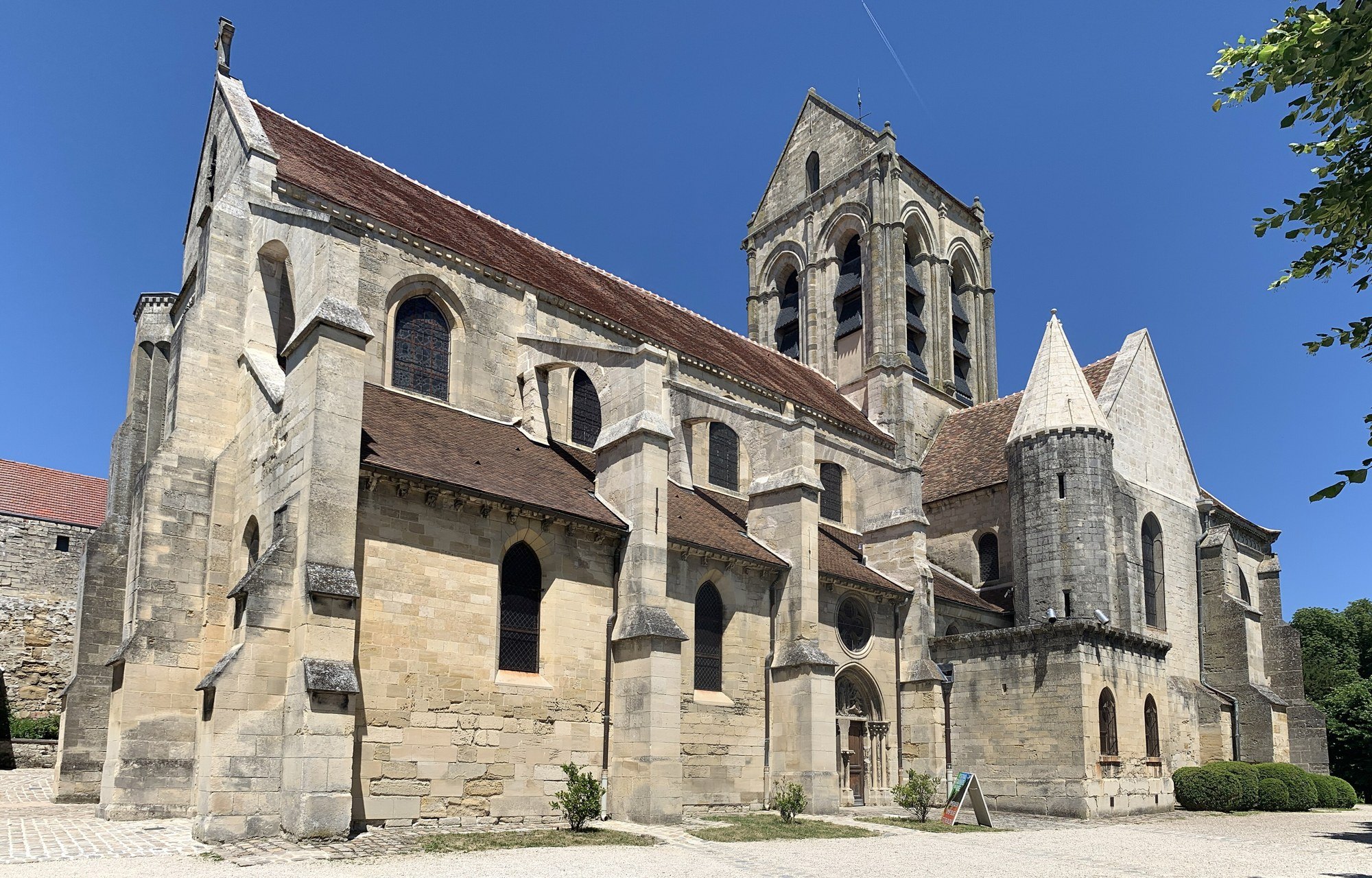
Header image: the church of Notre-Dame-de-l’Assomption in Auvers-sur-Oise, which Van Gogh painted in June 1890 (photo from 2021). Photo: Chabe01, CC BY-SA 4.0, via Wikimedia Commons.
Van Gogh arrived in Auvers-sur-Oise on May 20, 1890 and died there on July 29 of the same year. He lodged in a small room at the Auberge Ravoux, was placed in the care of Dr. Gachet, to whom Theo had entrusted him, and painted at a feverish pace, almost a painting a day: gardens, wheatfields, the church, portraits.
The village still preserves many of the settings of those two months. Here they are, one by one, with the works he painted at each place.
Van Gogh’s places in Auvers-sur-Oise, one by one
The Auberge Ravoux and Room No. 5
The inn, across from the town hall, is preserved as a place of remembrance, the “Maison de Van Gogh”. Room 5, the small attic room where he lived and died, has been restored to its original state and can be visited; there is a restaurant in the dining room.
Address: 52-56 rue du Général de Gaulle, 95430 Auvers-sur-Oise (Place de la Mairie).
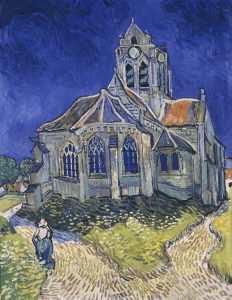
The church of Notre-Dame-de-l’Assomption
The church he painted in June 1890 still stands on a rise overlooking the village. Its worldwide fame comes from the painting, which is now in the Musée d’Orsay.
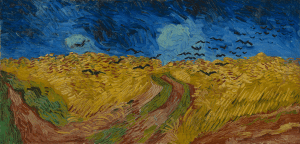
The surrounding wheatfields
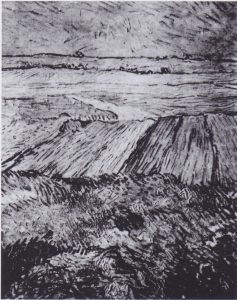
The fields around the village are those of his last wheatfield landscapes. He wrote of them: “They’re immense stretches of wheatfields under turbulent skies, and I made a point of trying to express sadness, extreme loneliness”.

The cemetery: the graves of Vincent and Theo
The municipal cemetery is on the edge of the village. After the burial, Theo wrote to his wife, Jo, that Vincent’s grave was near the entrance, in a sunny spot among the wheatfields. His remains were reburied in 1905, and in 1914 Theo, who had died in 1891, was buried beside him.
Dr. Gachet’s house
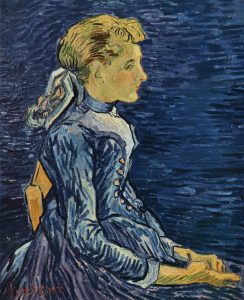
The house and garden of the doctor who looked after Vincent in Auvers are now a museum, opened to the public in 2003, on the 150th anniversary of the painter’s birth. There he painted the portrait of Dr. Gachet, the garden of the house and the doctor’s daughter, Marguerite.
Address: 78, rue Gachet, 95430 Auvers-sur-Oise.
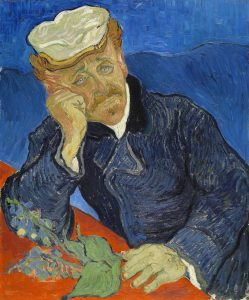 Portrait of Dr. Gachet
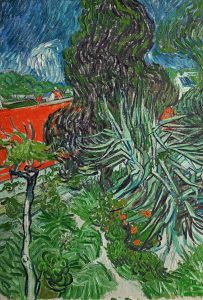 Dr. Gachet’s Garden
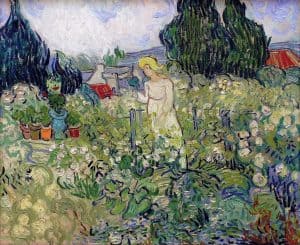 Mademoiselle Gachet in Her Garden at Auvers-sur-Oise
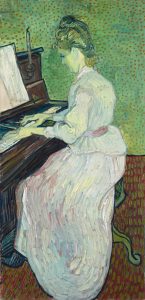 Marguerite Gachet at the Piano
The town hall and the Place de la Mairie
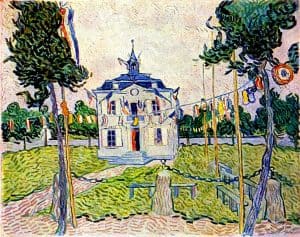
The town hall, right across from the Auberge Ravoux, is the building Van Gogh painted on July 14, 1890. The painting is in a private collection.
The Château d’Auvers
A 17th-century château that the Val-d’Oise department bought in 1987 and restored; it opened in 1994 as a visitor center devoted to the age of the Impressionists. In 1890 it inspired Van Gogh’s Landscape with the Château of Auvers at Sunset.

Museums and visits
Auberge Ravoux (Maison de Van Gogh). Visit Room 5, where Van Gogh lived, and a restaurant in the original dining room. Official website: maisondevangogh.fr.
Maison du docteur Gachet. Dr. Gachet’s house museum, with a garden and guided tours, linked to Van Gogh and the Impressionist painters. Official website: valdoise.fr.
Château d’Auvers. It offers a tour of the Impressionist world of Auvers and, from April 18, 2026, the exhibition “Van Gogh Influenceur, Héritages en mouvement”. Official website: valdoise.fr.
Getting there and where to stay
Auvers-sur-Oise has a station on Transilien line H, the commuter trains from Paris-Nord. From April to October, on Saturdays, Sundays and public holidays, there are direct trains from the Gare du Nord in Paris; the rest of the year, check the route before you go. You can visit on a day trip from Paris or stay overnight in the village.
More on Van Gogh in Auvers-sur-Oise
The full period, with its main works, is covered in Auvers-sur-Oise (1890). To find out which museums around the world hold his paintings today, see where to see Van Gogh’s paintings.
Sources: official websites vangoghmuseum.nl and valdoise.fr; English Wikipedia article “Auberge Ravoux”; French Wikipedia articles “Église Notre-Dame-de-l’Assomption d’Auvers-sur-Oise”, “Maison du docteur Gachet” and “Château d’Auvers”; entries for each work on museovangogh.org; photo from Wikimedia Commons.