
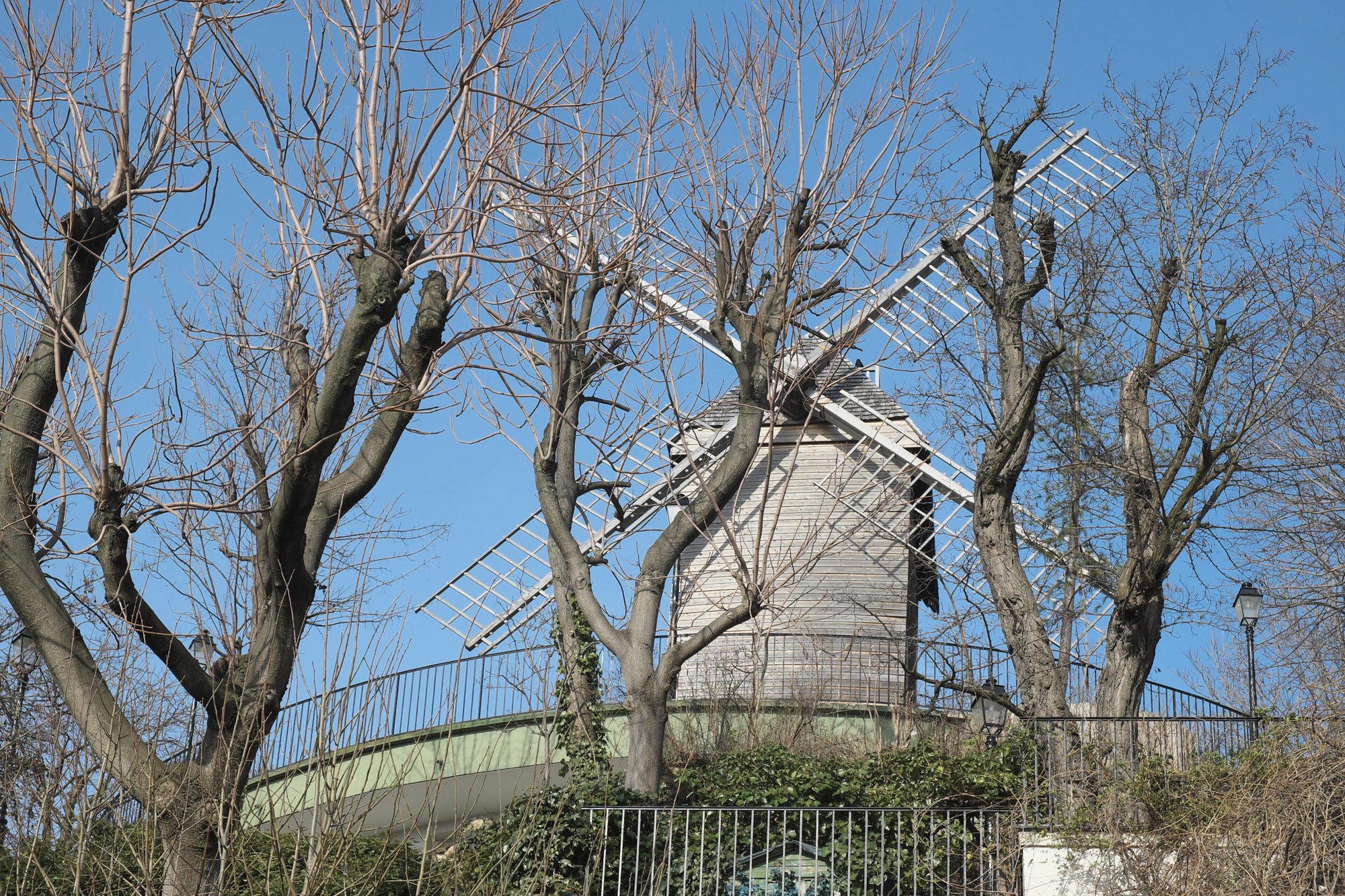
Header image: the Moulin Blute-fin, one of the two windmills of the Moulin de la Galette, in Montmartre. Photo: GFreihalter, CC BY-SA 3.0, via Wikimedia Commons.
Van Gogh lived in Paris for two years. He arrived in early March 1886 according to Wikipedia (the Van Gogh Museum’s edition of his letters dates the note in which he told Theo he was already in Paris to around February 28) to join his brother Theo in Montmartre: first on rue Laval and, from June 1886, at 54 rue Lepic. There he met Toulouse-Lautrec, Bernard, Signac and Tanguy, painted Montmartre and Asnières, and on February 19, 1888, he left the city for Arles.
The Montmartre of vegetable gardens and windmills that he painted is now a fully urban neighborhood, but some of the settings still stand. Here they are, with the works he painted at each one.
Van Gogh’s places in Paris, one by one
54 rue Lepic
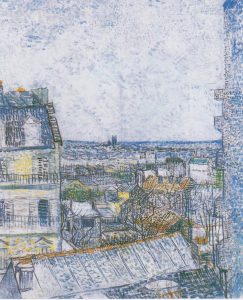
Vincent and Theo lived on the third floor of this building from 1886 to 1888, and a plaque commemorates it. From his window Vincent painted views of Paris.
Address: 54 rue Lepic, 75018 Paris.
The Moulin de la Galette: the Blute-fin and the Radet
Of the windmills he painted in several versions in 1886 and 1887, two still stand: the Blute-fin, at 75-77 rue Lepic, on private property that is not open to visitors, and the Radet, on the corner of 83 rue Lepic and rue Girardon. The Radet is no longer where Van Gogh saw it: it was taken down and moved to rue Girardon, and in 1924, by then without its machinery, it was placed on that corner on the roof of a building that is now a restaurant.
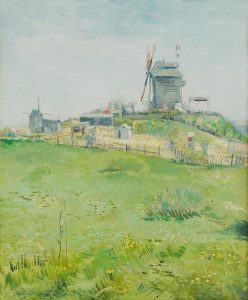 Le Moulin de la Galette (Carnegie Museum of Art)
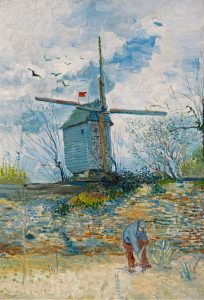 Le Moulin de la Galette (Private collection)
 Le Moulin de la Galette (Kröller-Müller Museum)
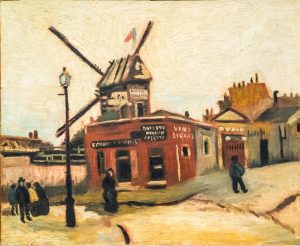 Le Moulin de la Galette (Langmatt Foundation)
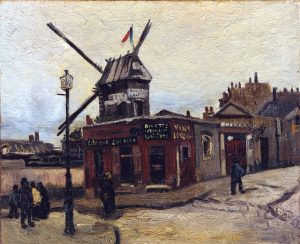 Le Moulin de la Galette (Nationalgalerie)
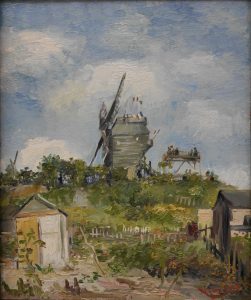 The Blute-Fin Windmill, Montmartre (Kelvingrove, Glasgow)
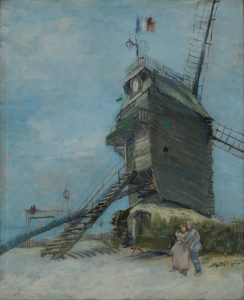 Le Moulin de la Galette (National Museum of Fine Arts, Buenos Aires)
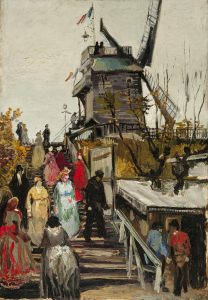 Le Blute-Fin Windmill (Museum de Fundatie)
 Montmartre
The vegetable gardens and quarries on the hill
Of the rural landscapes he painted on the hill, what remains is the Clos Montmartre vineyard, which you can see from the gardens of the Musée de Montmartre (12 rue Cortot). The rest of the area is now fully urban.
 Vegetable Gardens in Montmartre
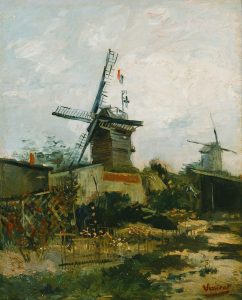 Le Moulin de Blute-Fin (Artizon Museum, Tokyo)
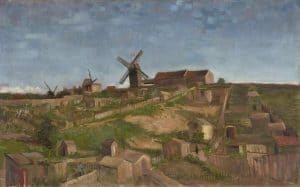 View of Montmartre with Windmills
 The Hill of Montmartre with Stone Quarry
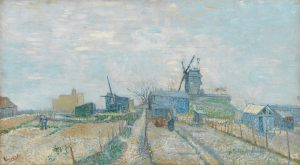 Montmartre
 Path in Montmartre
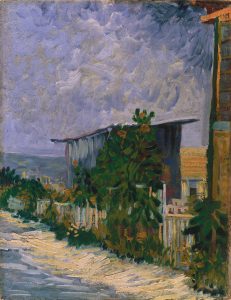 Montmartre Path with Sunflowers
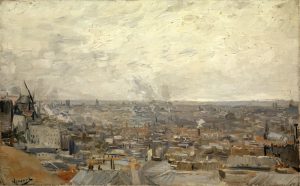 View of Paris from Montmartre
The Café du Tambourin (boulevard de Clichy)
At 62 boulevard de Clichy stood Agostina Segatori’s café, where Van Gogh mixed with other painters. There, in March 1887, he showed his collection of Japanese prints, and in July he exhibited works of his own and by Gauguin, Anquetin and Bernard. The café went bankrupt and changed its name in 1893: today only the site where it stood remains.
Address: 62 boulevard de Clichy, 75018 Paris.


Père Tanguy’s shop (rue Clauzel)
At 14 rue Clauzel, Julien Tanguy, a friend of the painters, sold artists’ colors; his shop was a key place in the development of Impressionism. Van Gogh portrayed him several times, and one of those portraits is now at the Musée Rodin (in Spanish). There is no record that the shop survives: it’s a place to see from the outside, not a visit.
Address: 14 rue Clauzel, 75009 Paris.
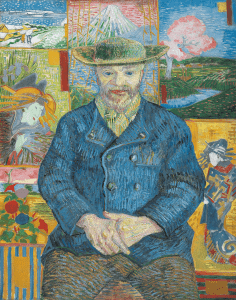 Portrait of Père Tanguy (Musée Rodin)
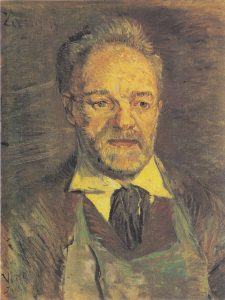 Portrait of Père Tanguy (Ny Carlsberg Glyptotek)
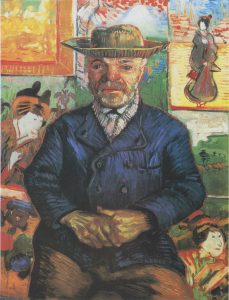 Portrait of Père Tanguy (Private collection)
Asnières and the bridges over the Seine
In 1887 Van Gogh painted the bridge over the Seine at Asnières, the Restaurant de la Sirène and the paths of the Voyer d’Argenson park.
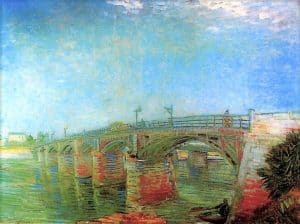 The Seine Bridge at Asnières
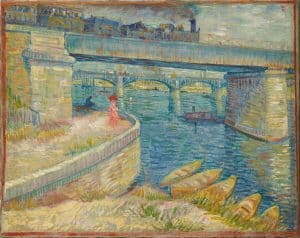 Bridges across the Seine at Asnières
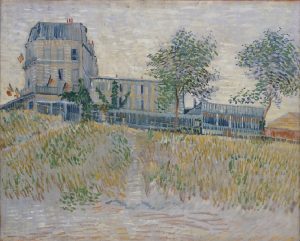 The Restaurant de la Sirène at Asnières
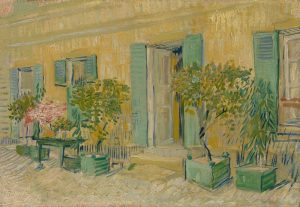 Exterior of a Restaurant at Asnières or Entrance to a Restaurant at Asnières
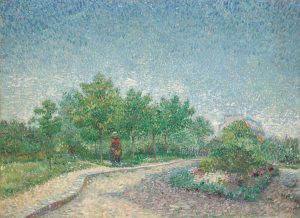 Lane in Voyer d’Argenson Park at Asnières
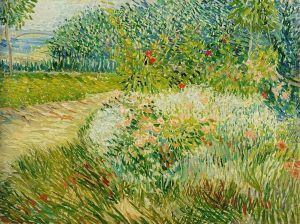 Corner of Voyer d’Argenson Park at Asnières
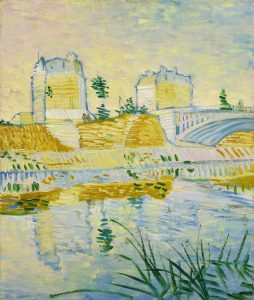 The Seine with the Pont de Clichy
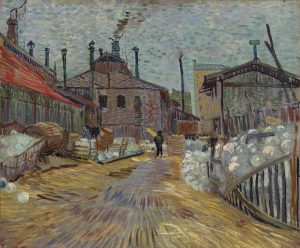 Factory at Asnières
Museums and visits
Musée d’Orsay. Since February 6, 2024, it has shown its Van Gogh works in rooms 36 and 37; among them are works from his Paris period, such as The Italian Woman and The Restaurant de la Sirène at Asnières. Official website: musee-orsay.fr. More on our page Van Gogh at the Musée d’Orsay (in Spanish).
Musée Rodin. It holds the Portrait of Père Tanguy (1887), which Rodin bought in 1894; it is shown in room 12 on the first floor of the permanent collections. Official website: musee-rodin.fr. More on our page Van Gogh at the Musée Rodin (in Spanish).
Getting there and where to stay
Four metro lines (2, 4, 12 and 13) serve Montmartre, with stations such as Pigalle, Abbesses and Anvers. Near Anvers is the lower station of the funicular, which goes up to the Sacré-Cœur and accepts a regular metro ticket.
More about Van Gogh in Paris
The full period, with his main works, is covered in Paris (1886–1888) (in Spanish). To find out which museums around the world hold his paintings today, see where to see Van Gogh’s paintings (in Spanish).
Sources: official websites museedemontmartre.fr, musee-orsay.fr and musee-rodin.fr; letter 567 in the Van Gogh Museum’s edition of the letters (vangoghletters.org); the French Wikipedia articles “Vincent van Gogh,” “Rue Lepic,” “Moulin de la Galette,” “Julien Tanguy” and “Asnières-sur-Seine”; the English Wikipedia articles “Boulevard de Clichy” and “Café du Tambourin”; the page for each work on museovangogh.org; photo from Wikimedia Commons.