
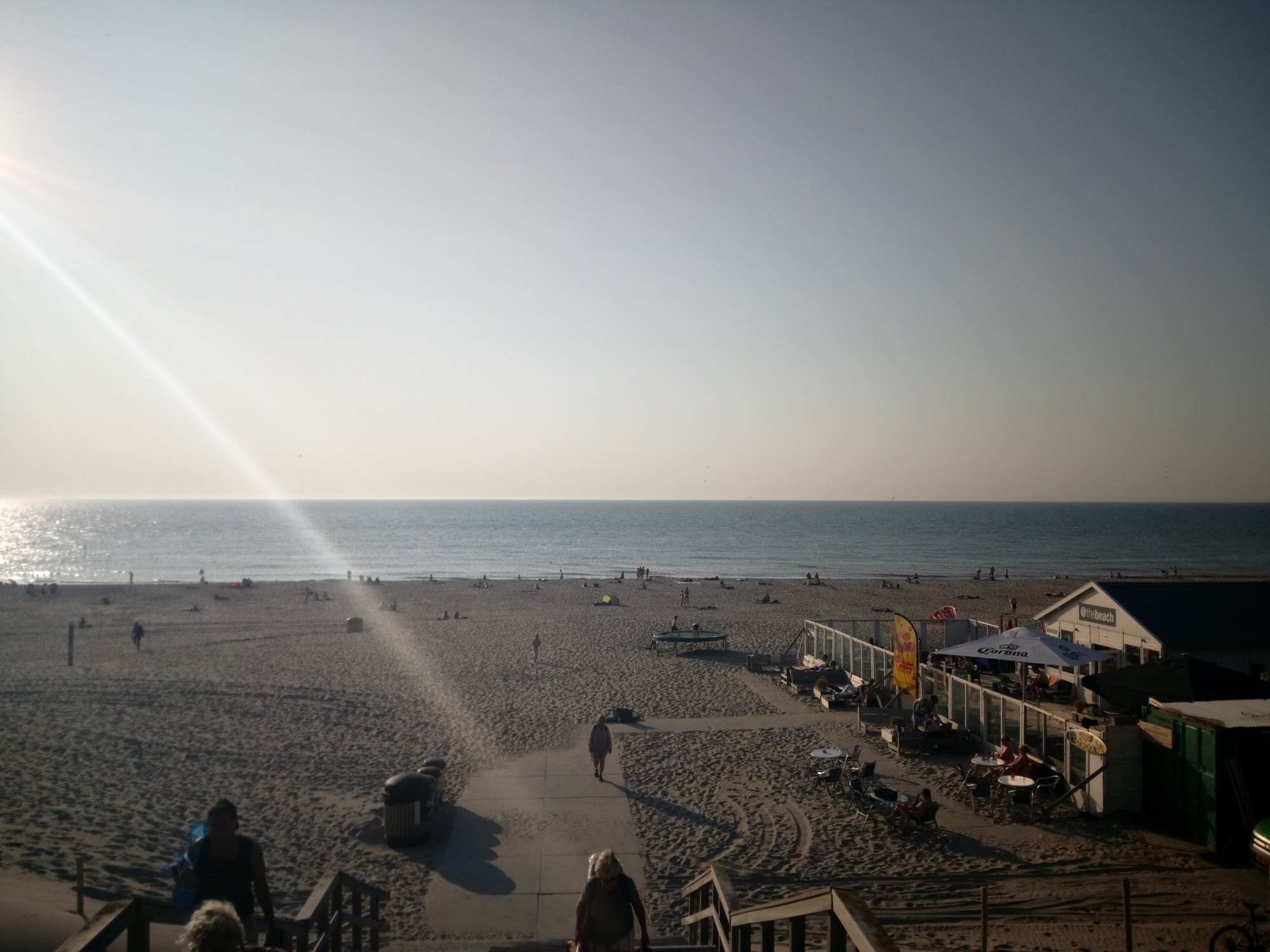
Header image: the beach at Scheveningen, which Van Gogh drew and painted in 1882 and 1883 (photo from July 2019). Photo: Prolete, CC0, via Wikimedia Commons.
Van Gogh lived in The Hague twice. The first time was as an apprentice at the art firm Goupil & Cie, from July 30, 1869, until his transfer to London in 1873. The second was as an aspiring painter: after taking lessons from Anton Mauve in late 1881, he settled in the city on December 25 of that year, following a bitter quarrel with his father. There he met Sien Hoornik in late January 1882, and he stayed until September 11, 1883, when he left for Drenthe, according to the chronology in the Van Gogh Museum’s edition of his letters.
This guide takes you through the places from those two periods in The Hague and on the beach at Scheveningen, and ends in Etten, the village where his parents lived in 1881, with the works he made at each spot.
Van Gogh’s places in The Hague, one by one
The Goupil & Cie gallery (Plaats 14)
At the Goupil & Cie branch at Plaats 14, Van Gogh started work as an apprentice on July 30, 1869, under H. G. Tersteeg. The sources consulted do not say what occupies the building today.
The Schenkweg studio (numbers 138 and 136)
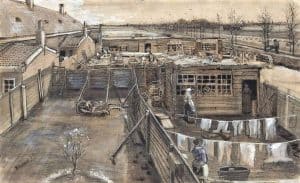
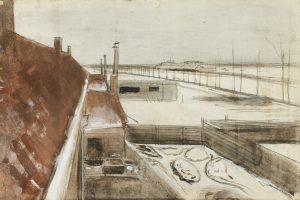
On January 1, 1882, he rented some rooms at Schenkweg 138 and set up his studio there; on July 4, 1882, he moved to number 136, according to the chronology of his letters. From his windows he drew the carpenter’s yard next door and the winter view from the studio. The sources consulted do not describe the site today.
The beach at Scheveningen
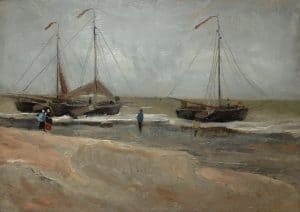
The Hague’s fishing village and seaside resort, with its sea, beach and dunes, is the one depicted in the Panorama Mesdag. Van Gogh went there often in 1882 and 1883, and between May and July 1883 he worked in the studio of his friend Théophile de Bock in Scheveningen, according to the chronology of his letters. There he painted and drew the sea and the beach, the women mending nets in the dunes, and the fishermen.
 View of the Sea at Scheveningen
 Beach at Scheveningen in Calm Weather
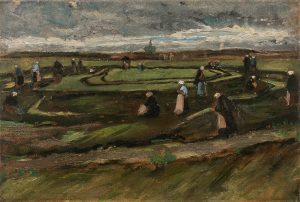 Women Mending Nets in the Dunes
 The Fisherman’s Wife
 Fisherman
The Panorama Mesdag
The huge cylindrical panorama of the sea, the beach and the village of Scheveningen that H. W. Mesdag completed in 1881, with the help of his wife, Sientje Mesdag-van Houten, and several students, among them George Hendrik Breitner, is on display in a museum of its own, according to Wikipedia. According to the chronology in the edition of his letters, Van Gogh went to see it in August 1881 with the painter Théophile de Bock.
The Kunstmuseum Den Haag
The museum holds a collection of the Hague School, the school of Mauve, his teacher in the city, and a modern art collection that, according to Wikipedia, includes works by Van Gogh. Our pages list six of his paintings at the museum, some on loan or on deposit, ranging from Nuenen to Auvers-sur-Oise.
Address: Stadhouderslaan 41, The Hague.
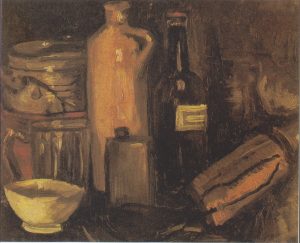 Still Life with Pots, Jar and Bottles
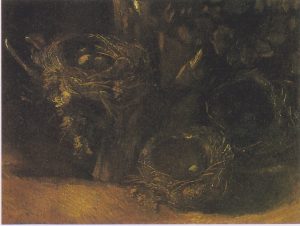 Three Birds’ Nests
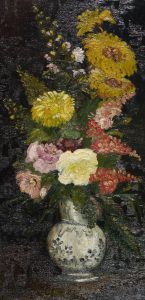 Vase with Flowers
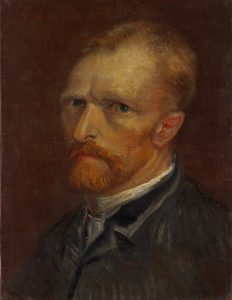 Self-Portrait
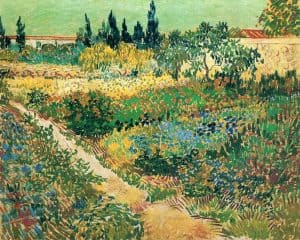 Flowering Garden with Path
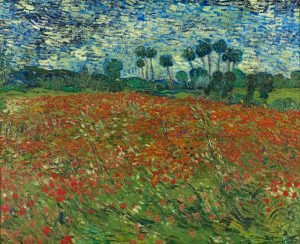 Field with Poppies
Etten: his parents’ parsonage
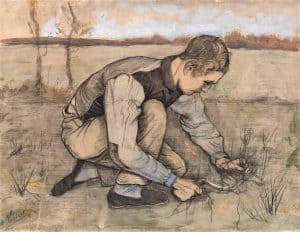
From October 1875 the Van Gogh family lived in Etten, where his father was the minister, at Roosendaalseweg 4, according to the chronology of his letters. Vincent spent much of 1881 there, until the break with his father that took him to The Hague. The sources consulted do not describe the site today.

Museums and visits
Kunstmuseum Den Haag. A Hague School collection (Mauve, Mesdag, Weissenbruch) and modern art including works by Van Gogh. Official website: kunstmuseum.nl. More on our page Van Gogh at the Kunstmuseum Den Haag.
Museum Panorama Mesdag. The 1881 panorama of Scheveningen that Van Gogh went to see in August 1881. Official website: panorama-mesdag.nl.
Getting there and where to stay
The city’s main station is Den Haag Centraal; from there the streetcar runs to Scheveningen, passing the Kurhaus.
More on Van Gogh in The Hague
The works from Etten, The Hague and Drenthe are in Early years (1881–1883), and his time as an art dealer at Goupil in The early life of Vincent van Gogh: from preacher to artist. To find out which museums around the world hold his paintings today, see where to see Van Gogh’s paintings.
Sources: official website kunstmuseum.nl; chronology of the Van Gogh Museum’s edition of the letters (vangoghletters.org); English Wikipedia articles “Kunstmuseum Den Haag” and “Panorama Mesdag”; the page for each work on museovangogh.org; photo from Wikimedia Commons.