
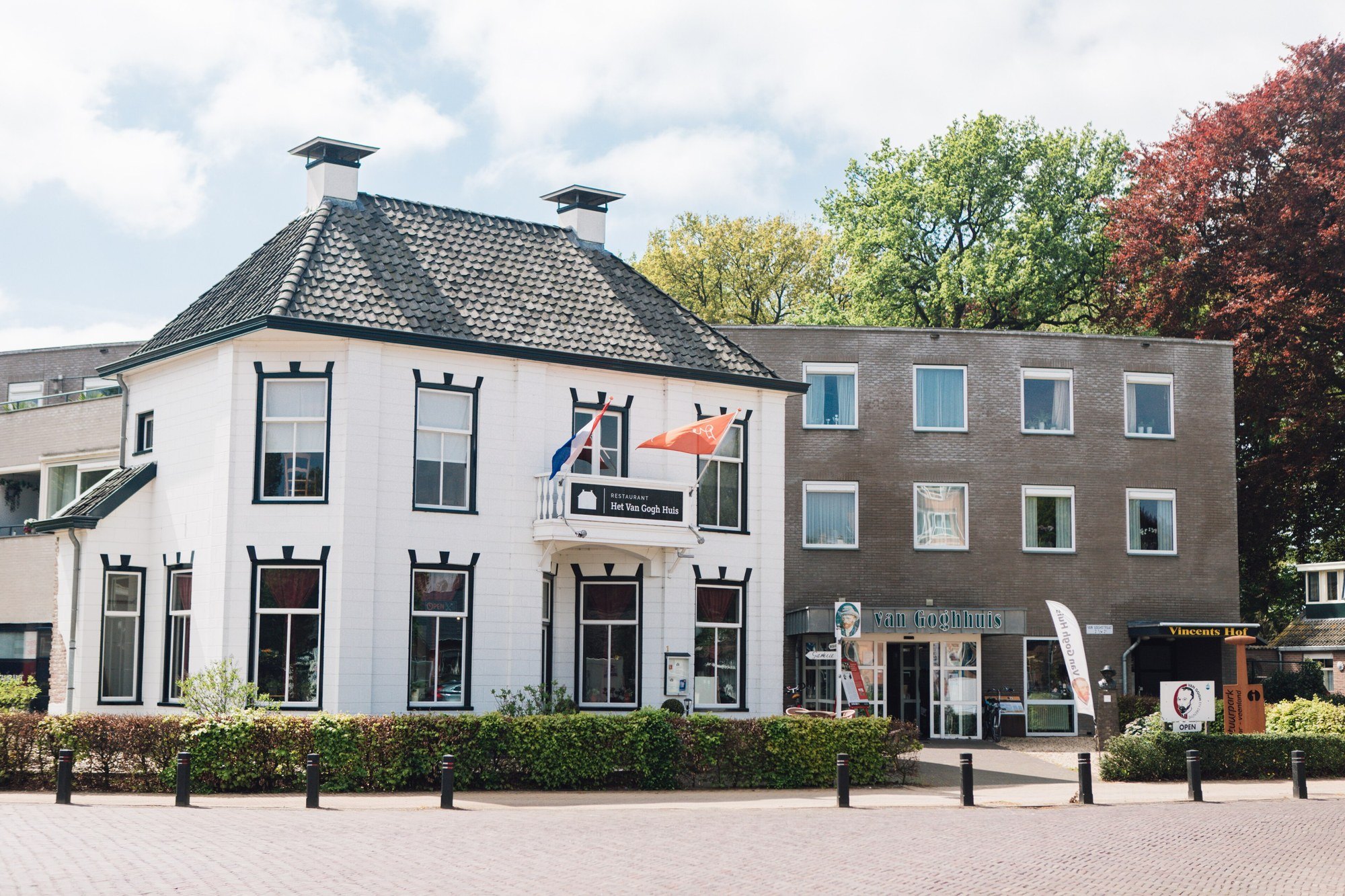
Header image: the Van Gogh Huis in Veenoord/Nieuw-Amsterdam, Hendrik Scholte’s former boarding house (photo from 2019). Photo: Richard Broekhuijzen (CrazyPhunk), CC BY-SA 4.0, via Wikimedia Commons.
On September 11, 1883, Van Gogh left The Hague for Hoogeveen, in Drenthe, according to the chronology of the edition of his letters. From there he traveled by barge along the canal to Nieuw-Amsterdam, where he rented a room in Hendrik Scholte’s house from October 2 until about December 4, according to Wikipedia. In that landscape of peat bogs and heath he painted and drew peasants, cottages and peat.
The guide also includes the Kröller-Müller Museum in Otterlo, in the center of the country, which has the second-largest collection of Van Gogh paintings in the world, after the Van Gogh Museum in Amsterdam.
Van Gogh’s places in Drenthe and Otterlo, one by one
Hoogeveen
This was his first stop in Drenthe: he arrived by train on September 11, 1883, and stayed at Albertus Hartsuiker’s boarding house, at Grote Kerksteeg 51, according to the chronology of his letters; according to Wikipedia, he stayed about two weeks. A Wikipedia photo caption places some cottages he painted in 1883 in Zwartschaap, on the road between Hoogeveen and Pesse.
The Van Gogh Huis Drenthe (Veenoord/Nieuw-Amsterdam)
Hendrik Scholte’s former boarding house, where Van Gogh lived and worked for two months in 1883, has been a museum since March 2003, according to Wikipedia. Its website describes it as the only building in the Netherlands open to the public where Van Gogh lived and worked; in the room he rented, the bed is still in the same spot and his painting materials are on display, with the palette laid out.
Address: Van Goghstraat 1, 7844 NP Veenoord/Nieuw-Amsterdam.


Nieuw-Amsterdam and the peat bogs
Van Gogh lodged at Scholte’s house in this peat-cutting village. According to Wikipedia, The Drawbridge in Nieuw-Amsterdam is probably the best-known work from that stay. Those months produced the peat barges, the peasants and the landscapes with peat stacks.

The Drents Museum (Assen)
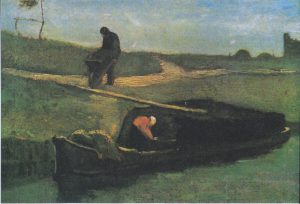
The provincial museum notes that Van Gogh spent almost three months of 1883 in Hoogeveen, Nieuw-Amsterdam-Veenoord and Zweeloo. Its website lists among its Van Gogh works The Peat Boat, Peasant Burning Weeds and Landscape with a Farm.

The Kröller-Müller Museum (Otterlo)
Inside De Hoge Veluwe National Park, the museum has the second-largest collection of Van Gogh paintings, after the Van Gogh Museum, according to Wikipedia; its website calls it the finest Van Gogh collection in the world. Its paintings include Café Terrace at Night, Road with Cypress and Star, Sorrowing Old Man (‘At Eternity’s Gate’) and a version of The Potato Eaters.
From September 15, 2026, to January 3, 2027, its website announces the exhibition “Van Gogh, All Our Paintings.”
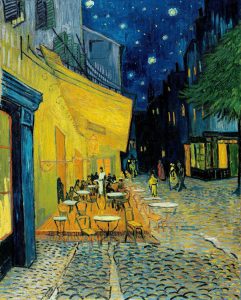 Café Terrace at Night
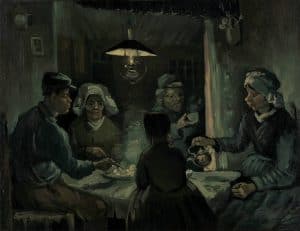 The Potato Eaters, Kröller-Müller version
 La Berceuse
 Sorrowing Old Man
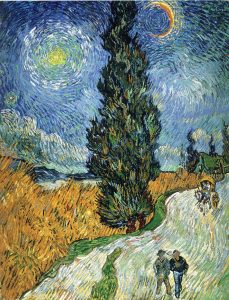 Road with Cypress and Star
 Portrait of Joseph Roulin
 The Sower (after Millet)
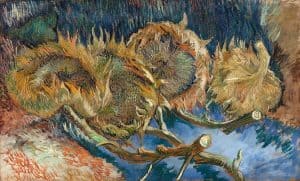 Four Sunflowers Gone to Seed
De Hoge Veluwe National Park
The national park around the museum has three entrances, at Otterlo, Schaarsbergen and Hoenderloo, and its website highlights the white bikes for getting around.
Museums and visits
Van Gogh Huis Drenthe. The house where Van Gogh lived for two months in 1883, with his room and a multimedia exhibition about his life. Official website: vangogh-drenthe.nl.
Drents Museum. The provincial museum of Drenthe, in Assen; it holds three works by Van Gogh, including The Peat Boat and Peasant Burning Weeds. Official website: drentsmuseum.nl.
Kröller-Müller Museum. The largest Van Gogh collection after the Van Gogh Museum in Amsterdam, inside De Hoge Veluwe National Park. Official website: krollermuller.nl. More on our page Van Gogh at the Kröller-Müller Museum.
Getting there and where to stay
Nieuw-Amsterdam is on the Zwolle–Emmen rail line, with a station at Veenoord; the Van Gogh Huis is at Van Goghstraat 1. The Kröller-Müller Museum is inside De Hoge Veluwe National Park, in Otterlo: check its official website for how to get there by public transportation.
More about Van Gogh in Drenthe and Otterlo
The Drenthe works are in Early years (1881–1883) (in Spanish), and the Kröller-Müller works, entry by entry, on our page about the museum. To find out which museums around the world hold his paintings today, see where to see Van Gogh’s paintings.
Sources: official websites vangogh-drenthe.nl, drentsmuseum.nl, hogeveluwe.nl and krollermuller.nl; the chronology of the Van Gogh Museum’s edition of the letters (vangoghletters.org); the English Wikipedia articles “Van Gogh House (Drenthe),” “Nieuw-Amsterdam, Drenthe,” “Hoogeveen” and “Kröller-Müller Museum”; each work’s entry on museovangogh.org; photo from Wikimedia Commons.