
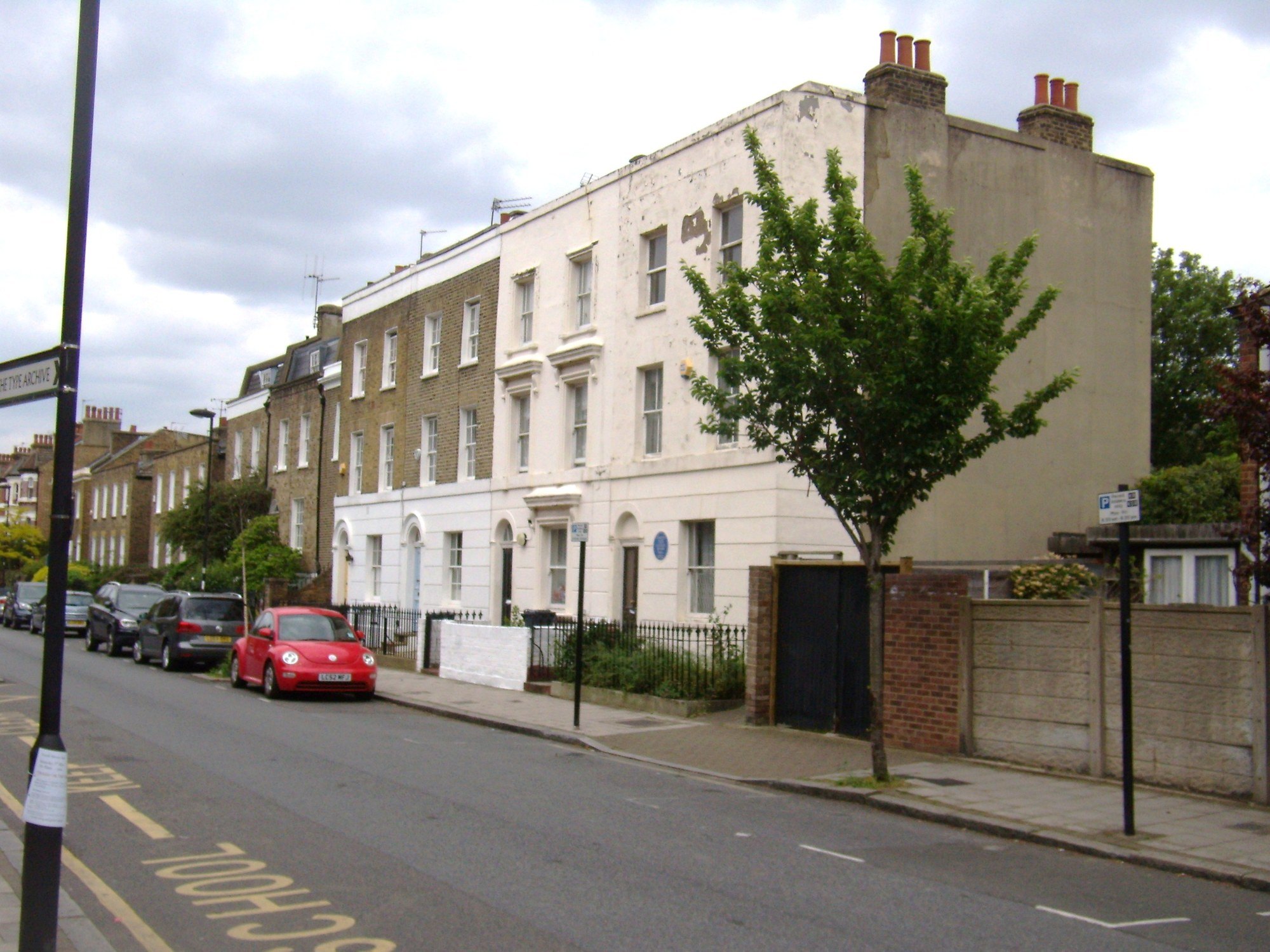
Header image: the houses on Hackford Road, London, where Van Gogh lived in 1873–1874; the plaque is visible on the white facade. Photo: Udimu, CC BY-SA 4.0, via Wikimedia Commons.
Van Gogh lived in England before he became a painter. Around May 19, 1873, he started work at the London branch of the art dealers Goupil & Co., and in May 1875 he was transferred to Paris. He came back in April 1876 as an assistant teacher at a school in Ramsgate, moved to Isleworth at the end of June, and on October 29, 1876, gave his first sermon in Richmond, according to the chronology of the Van Gogh Museum’s edition of his letters.
This guide covers the places from those years and the London museums where you can see his paintings today, each with its own entry.
Van Gogh’s places in England, one by one
Goupil & Co. (17 Southampton Street, The Strand)
Goupil’s London branch was at 17 Southampton Street, off the Strand; Van Gogh started work there around May 19, 1873. The sources we consulted do not say what occupies the building today.
The house on Hackford Road
From late August 1873 Van Gogh lived at 87 Hackford Road, in the home of Mrs. Loyer and her daughter Eugenie, with whom he fell in love without being loved in return, according to Wikipedia. It is a three-story terraced house from around 1840 that since 1973 has carried a blue plaque, listed by English Heritage, that reads: “Vincent van Gogh 1853-1890 Painter lived here 1873-1874.”
Address: 87 Hackford Road, South Lambeth, London SW9 0RE.
Ramsgate: William Stokes’s school
In April 1876 Van Gogh arrived in Ramsgate to work as an assistant teacher at William Stokes’s boarding school on Royal Road; he lodged in an attic room at 11 Spencer Square, which now has a blue plaque, according to Wikipedia. “There are 24 boys between the ages of 10 and 14,” he wrote of the school, adding: “The window looks out onto the sea” (letter 76).
Isleworth: Twickenham Road
At the end of June 1876 Stokes moved his school to Linkfield House, at 183 Twickenham Road in Isleworth, and in early July Van Gogh moved to the school of the Reverend Thomas Slade-Jones at Holme Court, at 158 on the same road, according to the edition of his letters. There he was a teacher and assistant preacher; according to Wikipedia, a blue plaque on Twickenham Road marks the house where he lived.
Richmond: the church of his first sermon
At the Wesleyan Methodist church in Richmond, on the corner of Kew Road and Evelyn Road, Van Gogh preached his first sermon on Sunday, October 29, 1876; in it he alluded several times to Bunyan’s The Pilgrim’s Progress, according to the notes to letter 96. The sources we consulted do not say what the building is used for today.
The National Gallery (Trafalgar Square)
It holds several works by Van Gogh, including A Wheatfield, with Cypresses, on view in Room 43 according to its website, the 1888 version of Sunflowers and Van Gogh’s Chair. A Wheatfield, with Cypresses was bought in 1923 with the Courtauld Fund.
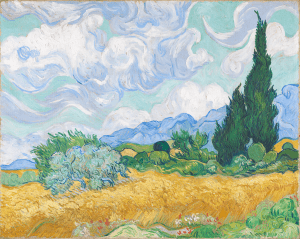 A Wheatfield, with Cypresses
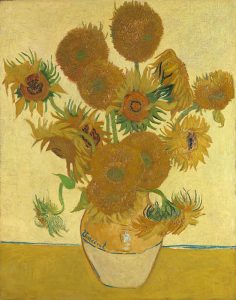 Sunflowers
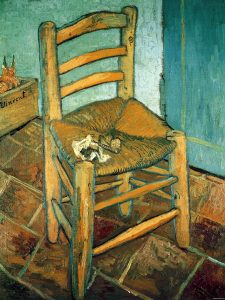 Van Gogh’s Chair
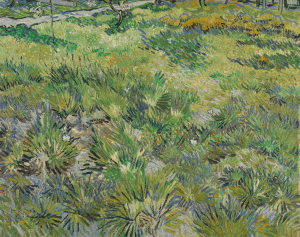 Long Grass with Butterflies
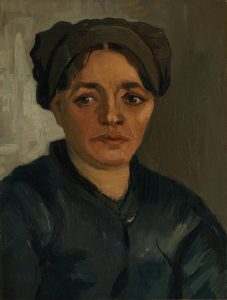 Head of a Peasant Woman
The Courtauld Gallery (Somerset House)
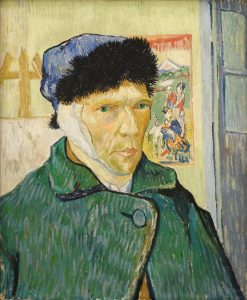
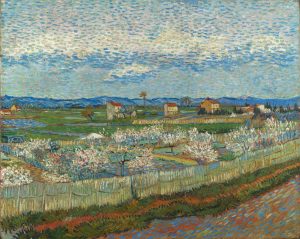
It houses the Self-Portrait with Bandaged Ear, which Van Gogh painted in January 1889, a week after leaving the hospital in Arles; Samuel Courtauld bought it in October 1928 and bequeathed it to the collection in 1948. It also holds La Crau with Peach Trees in Blossom.
Tate
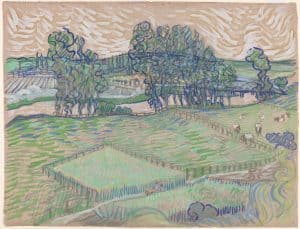
The Tate collection includes the drawing The Oise at Auvers (1890), bequeathed by C. Frank Stoop in 1933.
Museums and visits
The National Gallery. It holds A Wheatfield, with Cypresses, the 1888 Sunflowers, Van Gogh’s Chair and other works by Van Gogh. Official website: nationalgallery.org.uk. More on our page Van Gogh at the National Gallery.
The Courtauld Gallery. It shows the Self-Portrait with Bandaged Ear; in 2022 it held an exhibition on Van Gogh’s self-portraits. Official website: courtauld.ac.uk. More on our page Van Gogh at the Courtauld Gallery.
Tate. Its artist page brings together the Van Gogh works in the Tate collection. Official website: tate.org.uk.
Getting there and where to stay
The National Gallery is on Trafalgar Square; just east of the square is Charing Cross station, for both trains and the Underground. Ramsgate has trains to London (St Pancras, Charing Cross and Victoria), so you can visit it on a day trip.
More about Van Gogh in England
His years as an art dealer, teacher and preacher are covered in The early life of Vincent van Gogh: from preacher to artist (in Spanish). To find out which museums around the world hold his paintings today, see where to see Van Gogh’s paintings.
Sources: official websites english-heritage.org.uk, nationalgallery.org.uk, gallerycollections.courtauld.ac.uk, tate.org.uk and courtauld.ac.uk; letters 76, 86 and 96 and the chronology of the Van Gogh Museum’s edition of the letters (vangoghletters.org); the English Wikipedia articles “Isleworth,” “Ramsgate” and “Vincent van Gogh”; each work’s entry on museovangogh.org; photo from Wikimedia Commons.